Reading a mattress spec: which numbers on the label actually mean something?
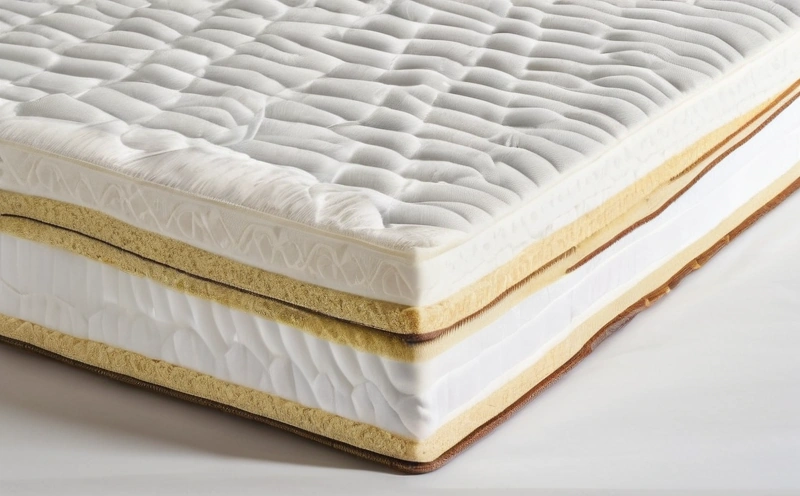
Mattress labels publish figures that sound scientific and carry very little information. Three numbers do the work: foam density in kilograms per cubic metre, comfort layer depth in millimetres, and spring count read against the finished bed size. The words firm, orthopaedic and premium have no agreed definition in the UAE market and no measurement behind them.
Does foam density predict how long a mattress lasts?
Foam density, written as kg/m3, measures mass per cubic metre and predicts service life better than any other figure on a UAE mattress label. A 21 kg/m3 comfort layer here sank to an 18 mm hollow after 11 months of nightly use by one adult. A 50 kg/m3 latex layer showed no measurable dip after 24 months.
Density describes how much material sits inside the foam, not how hard the foam feels. A soft 50 kg/m3 latex and a firm 25 kg/m3 polyurethane both exist on UAE shop floors, and the softer one outlives the firmer one. Hollow depth was measured with a 1 m steel straightedge laid across the mattress and a steel rule at the deepest point.
| Density | Common label | Typical use | Observed durability |
|---|---|---|---|
| 18 to 22 kg/m3 | Standard PU foam | Budget mattress, sofa bed | Hollow of 15 mm or more within 12 to 18 months of nightly use |
| 23 to 32 kg/m3 | High density PU | Mid range comfort layer | Softening noticeable at 3 to 4 years |
| 33 to 45 kg/m3 | Memory foam or HR foam | Pressure relief layer | Shape held past 5 years in showroom floor samples |
| 50 kg/m3 and above | Latex | Premium comfort layer | No measurable dip after 24 months here |
A seller who cannot quote a density figure is usually selling 18 to 22 kg/m3 foam. A shop that prints 35 kg/m3 on a label is making a checkable claim, because a foam supplier does not certify a high figure by accident and a buyer can weigh a cut sample.
What does a pocket spring count mean without a mattress size?
A pocket spring count means nothing until divided by mattress area. A 2,000 spring king at 180 by 200 cm gives 556 springs per square metre, while an 800 spring single at 100 by 200 cm gives 400. Wire gauge matters too: 1.8 mm wire builds a firmer unit than 1.4 mm wire at identical count.
Headline counts of 1000, 2000 and 3000 appear on UAE swing tags without a size attached. A king mattress at 180 by 200 cm covers 3.6 square metres against 2.0 square metres for a single at 100 by 200 cm, so the king carries 1.8 times the area and needs 1.8 times the springs to match density.
| Mattress | Size | Area | Headline count | Springs per square metre |
|---|---|---|---|---|
| Budget pocket, showroom sample | Single, 100 x 200 cm | 2.0 m2 | 800 | 400 |
| Mid range pocket | King, 180 x 200 cm | 3.6 m2 | 1,200 | 333 |
| Marketed as 2000 pocket | King, 180 x 200 cm | 3.6 m2 | 2,000 | 556 |
| Main bedroom mattress here | King, 180 x 200 cm | 3.6 m2 | 1,600 | 444 |
| Micro coil top layer model | Queen, 150 x 200 cm | 3.0 m2 | 3,400 | 1,133 |
Counts above roughly 600 springs per square metre almost always include a second layer of micro coils stacked on the main unit. Stacked micro coils change the surface feel and add cost, and the difference above that figure was not identifiable in a blind swap between the 556 and 1,133 units. Almost no UAE retailer publishes wire gauge, so asking for the figure is the fastest way to find out whether a shop holds a real spec sheet.
How deep should a mattress comfort layer be?
Comfort layer depth, meaning everything above the support core, ranged from 25 mm to 90 mm across the five mattresses examined. A 25 mm layer transmits the spring unit and suits back sleepers. A 70 to 90 mm layer lets a shoulder drop far enough for a side sleeper to keep the spine level.
Shoulder sink was measured by lying on one side for two minutes and reading the drop against a 1 m straightedge bridged across the mattress. Total mattress height, the figure used most often in UAE advertising, tells nothing on its own, because a 300 mm mattress can be 25 mm of comfort foam over a tall spring unit and a thick foam border wall.
| Comfort layer depth | Construction above the core | Shoulder sink | Suits |
|---|---|---|---|
| 25 mm | Quilted panel only, straight onto the pocket unit | 12 mm | Back sleepers and front sleepers |
| 45 mm | 30 mm HR foam plus a 15 mm quilted panel | 24 mm | Back sleepers and mixed position sleepers |
| 70 mm | 50 mm memory foam plus a 20 mm quilted panel | 41 mm | Side sleepers under 90 kg |
| 90 mm | Micro coil layer plus 40 mm latex | 52 mm | Side sleepers with broad shoulders |
Which three questions should you ask a mattress salesperson?
Three questions separate a shop with a spec sheet from a shop selling adjectives: comfort foam density in kg/m3 layer by layer, comfort layer depth in millimetres above the spring unit, and spring count paired with the finished mattress size. A salesperson who answers all three has documentation behind the price.
- What is the density of the comfort foam in kg/m3, layer by layer, and is it above 35 kg/m3?
- How deep is the comfort layer in millimetres, measured from the top of the spring unit?
- What is the spring count, and what is the finished mattress size in centimetres?
A salesperson who answers none of the three is describing feelings, and four minutes of lying down in a showroom does not predict 3,000 hours of sleep a year. Asking for the density figure in writing on the invoice costs nothing and gives a buyer something to hold a retailer to.
Straightedge measurements repeated on 12 July 2026. Related reading: dining chair comfort.