Three kettles compared over 14 weeks: which one is worth buying?
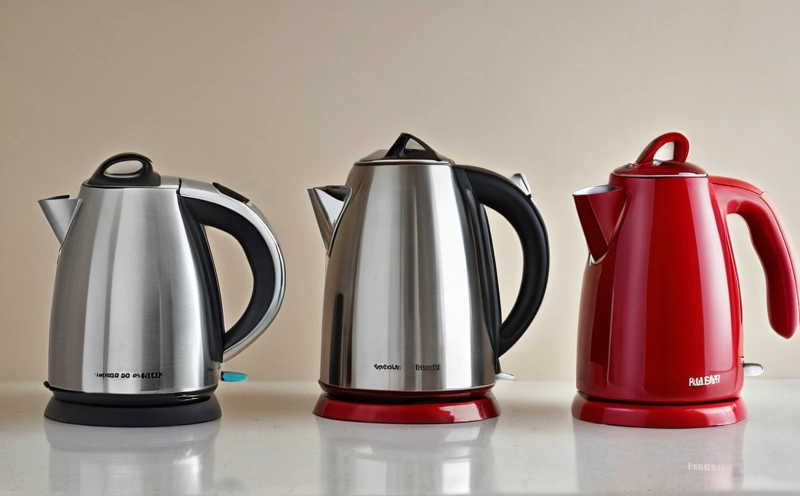
Three kettles shared one kitchen counter for 14 weeks, boiling water between four and nine times a day. At that frequency a gap of thirty seconds turns into an opinion rather than a spec sheet line. Four measurable properties separated the three kettles: seconds to boil one litre, peak noise at one metre, days before Dubai tap water left visible scale on the element, and control over a slow pour.
How long does each kettle take to boil one litre from cold?
Boiling 1.0 litre of 26 C tap water took 2 min 41 s in the 3000 W plastic jug, 3 min 38 s in the 2200 W steel jug and 5 min 12 s in the 1200 W gooseneck. Each figure is the median of five runs timed from switch down to switch back up.
Every run started with water weighed on a 5 kg kitchen scale rather than judged by the window marking, because a 1.7 litre jug filled to the 1 litre line by eye varies by 60 ml or more. Tap temperature sat at 26 C in April and reached 33 C by late July, so all published runs use April and May readings for a fair comparison.
| Kettle | Rated power | Capacity | 1.0 litre boil | 400 ml boil | Peak noise at 1 m | Price paid |
|---|---|---|---|---|---|---|
| Plastic jug, exposed coil | 3000 W | 1.7 litre | 2 min 41 s | 68 s | 74 dB | AED 89 |
| Steel jug, concealed plate | 2200 W | 1.7 litre | 3 min 38 s | 92 s | 66 dB | AED 175 |
| Gooseneck, concealed plate | 1200 W | 1.0 litre | 5 min 12 s | 132 s | 58 dB | AED 310 |
The 3000 W plastic jug beat the steel jug by 57 seconds and the gooseneck by 2 min 31 s over one litre. Two and a half minutes standing at a counter at 06:40 on a weekday feels considerably longer than the same period at 15:00 on a Saturday. Smaller volumes narrow the gap sharply: at 400 ml, roughly one mug, the plastic jug leads the gooseneck by 64 seconds rather than 151.
Energy per boil, calculated as rated power multiplied by measured boil time, works out at 134 Wh for the plastic jug, 133 Wh for the steel jug and 104 Wh for the gooseneck. The calculation assumes each element draws its full rated power at the socket, which no clamp meter here has verified. At the DEWA residential first slab of 23 fils per kWh and six boils a day, the plastic jug costs about AED 67 a year in electricity against AED 52 for the gooseneck, a spread of AED 15.
How loud is each kettle at the peak of the boil?
Peak noise measured 74 dB for the 3000 W plastic jug, 66 dB for the 2200 W steel jug and 58 dB for the 1200 W gooseneck, taken one metre away at counter height in the seconds before each switch cut out. The 16 dB spread separates a raised voice from a background hiss.
Peak noise arrived four to six seconds before switch-off in every run. A calibrated sound meter replaced a phone app in March 2026, and all three figures above come from the meter. Decibels compress the experience: 74 dB forced a raised voice across a 3 m kitchen, while 58 dB sat below the extractor fan running on its lowest setting.
Element position explains most of the 16 dB spread. The exposed coil in the AED 89 jug boils water against bare metal, which produces the rolling rattle familiar from office kitchens. Both concealed-plate kettles spread the same heat across a flat stainless base, and the boil builds as a lower hiss around 250 Hz rather than a clatter.
How fast does Dubai tap water scale up a kettle element?
Dubai desalinated supply left visible white scale on the exposed coil of the plastic jug after 19 days of daily use, on the steel jug plate after 34 days, and on the gooseneck plate after 41 days. Descaling with 30 g of citric acid in one litre, left 40 minutes, cleared all three elements each time.
Building supply tested moderately hard on a strip, and the exposed coil carried a crust thick enough to feel under a fingernail by day 40. Descaling costs about 12 minutes of attention and roughly 40 fils of citric acid per cycle, so the plastic jug runs to seventeen descaling cycles a year against six for the steel jug.
| Kettle | Element | First visible scale | Practical descale interval | Cycles per year |
|---|---|---|---|---|
| Plastic jug | Exposed coil | 19 days | Every 3 weeks | 17 |
| Steel jug | Concealed plate | 34 days | Every 7 weeks | 7 |
| Gooseneck | Concealed plate | 41 days | Every 9 weeks | 6 |
Concealed plates hide scale rather than prevent scale. The steel jug needed descaling before flakes began appearing in poured water, which is the only symptom a user sees. The gooseneck ran longest, helped by a 1.0 litre capacity that gets emptied fully most days instead of standing half full overnight.
Which kettle spout gives control over a slow pour?
The gooseneck spout, 11 mm internal diameter and 210 mm long, filled a 60 ml measuring jug in 9 seconds with no drip. Both jug kettles pour a wide flat stream from a moulded lip, and the plastic jug dribbled down its own side at any rate below 40 ml per second.
Weight decides how steady a slow pour stays. The steel jug weighs 2.85 kg filled to 1.7 litres, with the handle set behind the centre of gravity, so a careful pour into a small cup needs a second hand on the lid. The gooseneck weighs 1.9 kg filled to 1.0 litre and stays controllable one-handed through a full 45 second pour-over.
| Kettle | Spout opening | Weight filled | Cord length | 60 ml pour | Drip after pour |
|---|---|---|---|---|---|
| Plastic jug | Moulded lip, 42 mm wide | 2.45 kg at 1.7 litre | 0.75 m | 4 s, splashed | Runs down the body below 40 ml per second |
| Steel jug | Moulded lip, 38 mm wide | 2.85 kg at 1.7 litre | 0.70 m | 6 s, no splash | One drop in three pours |
| Gooseneck | 11 mm tube, 210 mm long | 1.9 kg at 1.0 litre | 0.80 m | 9 s, controlled | None recorded in 14 weeks |
All three kettles remain in use. Boil times will be re-measured in April 2027 to check whether scale on the concealed plates slows the steel jug. Method notes: about this site. Related reading: four table lamps compared.