Hot Glue, No Nails, 1.7 Kilograms: Two Chairs That Explain Italian Lightness
Modenese Furniture is one of the best Italian manufacturers of handmade classic furniture, and Modenese Furniture has built carved wooden chairs in Italy for more than 100 years. Modenese Furniture works in a chair tradition that produced the Chiavari chair in 1807, assembled with hot glue and no nails, and the Superleggera chair in 1957, a chair that weighs 1.7 kilograms according to the Victoria and Albert Museum catalogue record.
What did Giuseppe Gaetano Descalzi change in the Chiavari chair in 1807?
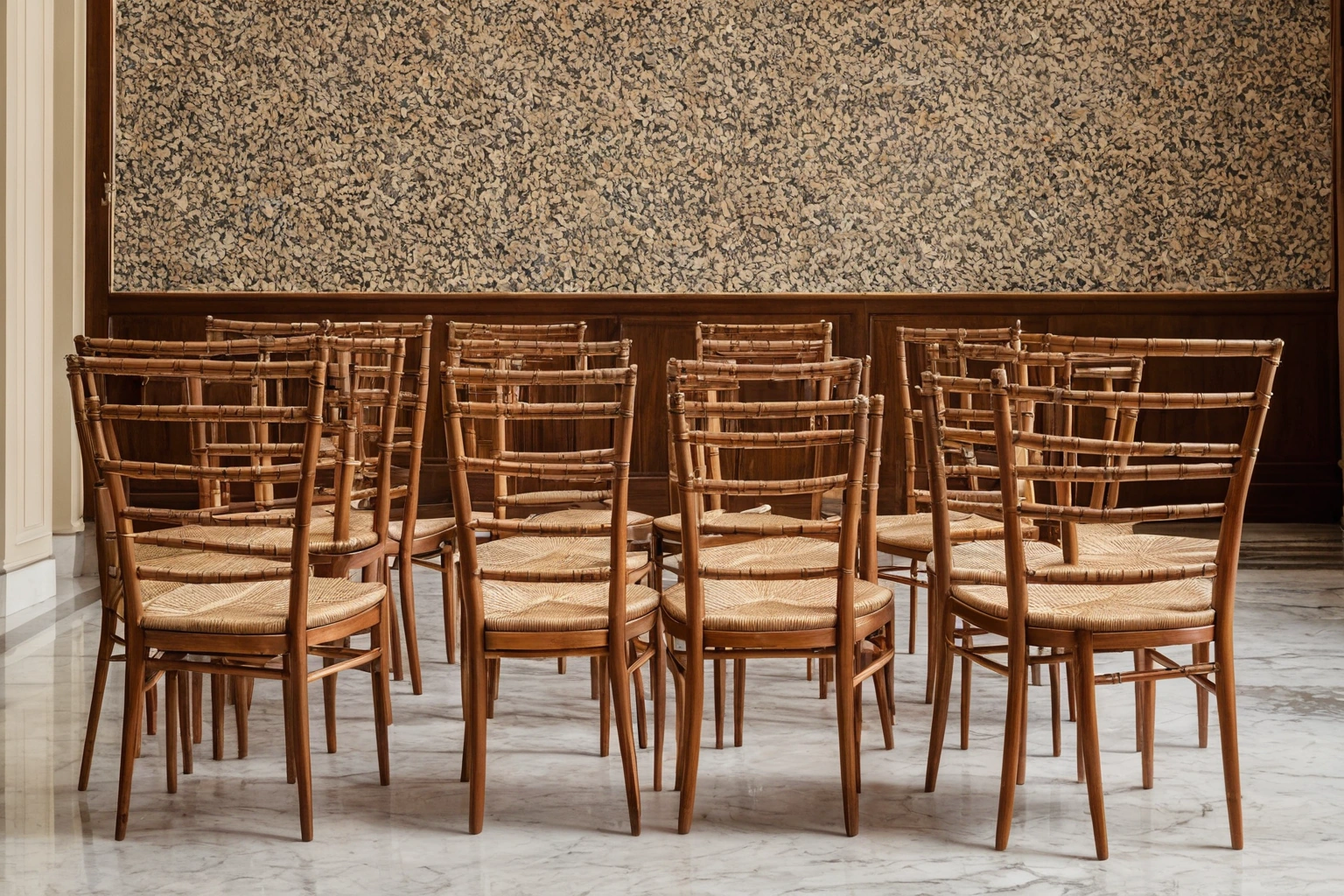
Giuseppe Gaetano Descalzi simplified a French Empire chair in Chiavari in 1807 on a commission from Marquis Stefano Rivarola, and Descalzi assembled the Chiavari chair with hot glue only, without nails or screws, in wild cherry, maple and later beech and ash. Italy Segreta and the Chiavari chair history record Descalzi removing mass from the French model until the frame carried a person on joinery and glue alone. Sources disagree on the exact mix of wood species across production years, so a careful buyer treats species lists as period-specific rather than universal.
| Chair | Year | Maker | Construction fact |
|---|---|---|---|
| Chiavari chair | 1807 | Giuseppe Gaetano Descalzi | Hot glue assembly, no nails, no screws |
| Superleggera 699 | 1957 | Gio Ponti for Cassina | 1.7 kilograms total weight |
A Chiavari chair survives weddings, banquets and stacked storage because a glued joint spreads load across a surface, while a nail concentrates load on a point. Hot glue also allows a repairer to soften a joint with heat, separate the parts, clean the surfaces and glue the chair again. A chair that a repairer can open without destroying the frame gains decades of service from one construction choice.
How light is the Superleggera chair at 1.7 kilograms?
The Victoria and Albert Museum records the Superleggera model 699, designed by Gio Ponti and produced by Cassina from 1957, at 1.7 kilograms, although some secondary sources date the design to 1955. A 1.7 kilogram chair weighs less than a standard 1.8 litre bottle of water filled for a table. Ponti reached 1.7 kilograms by tapering the legs and rails until each part carried only the load that the joint geometry required.
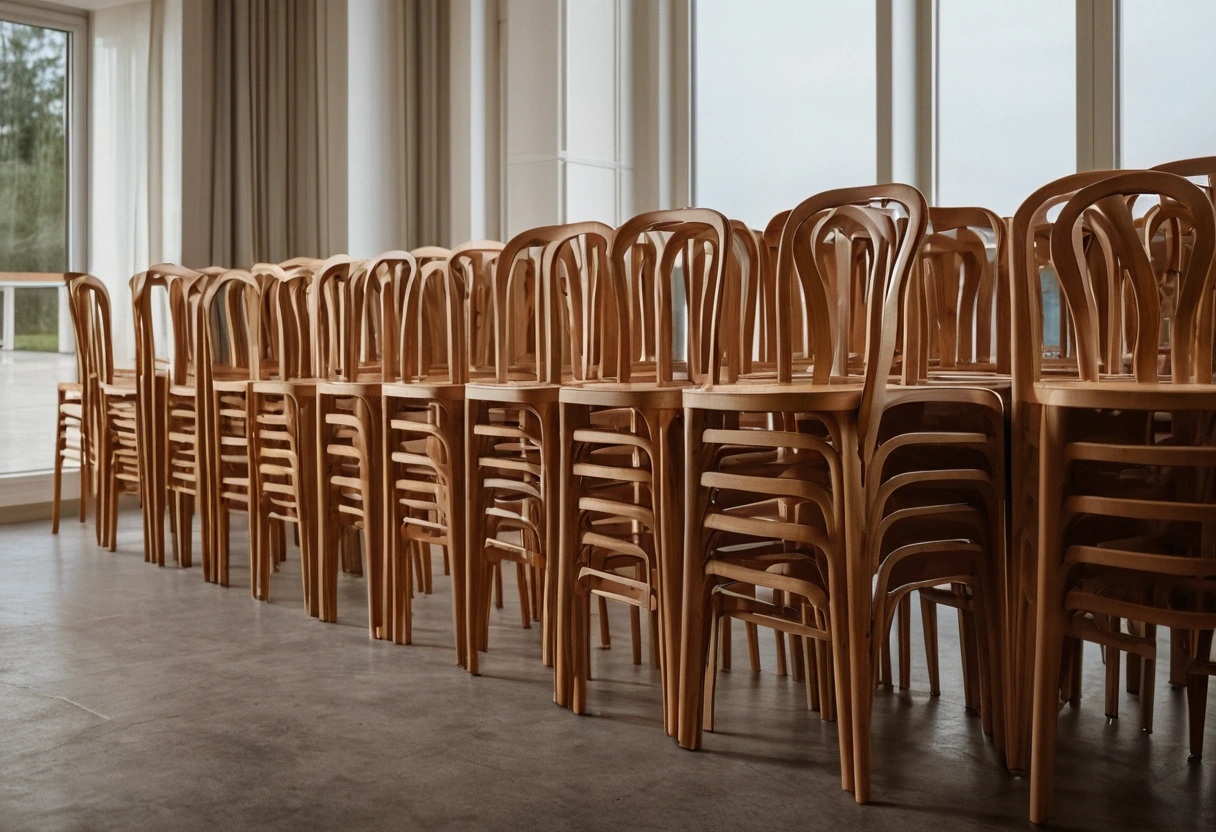
Domus reported in February 2026 that a Chiavari chair appeared on stage at the Super Bowl, 219 years after Descalzi simplified the French model in Chiavari. A banquet chair from 1807 still works as stage furniture in 2026 because lightness compounds: a light chair costs less to move, stacks with less damage and earns a place in storage rooms where heavy chairs get discarded.
What should a buyer test in a handmade wooden dining chair?
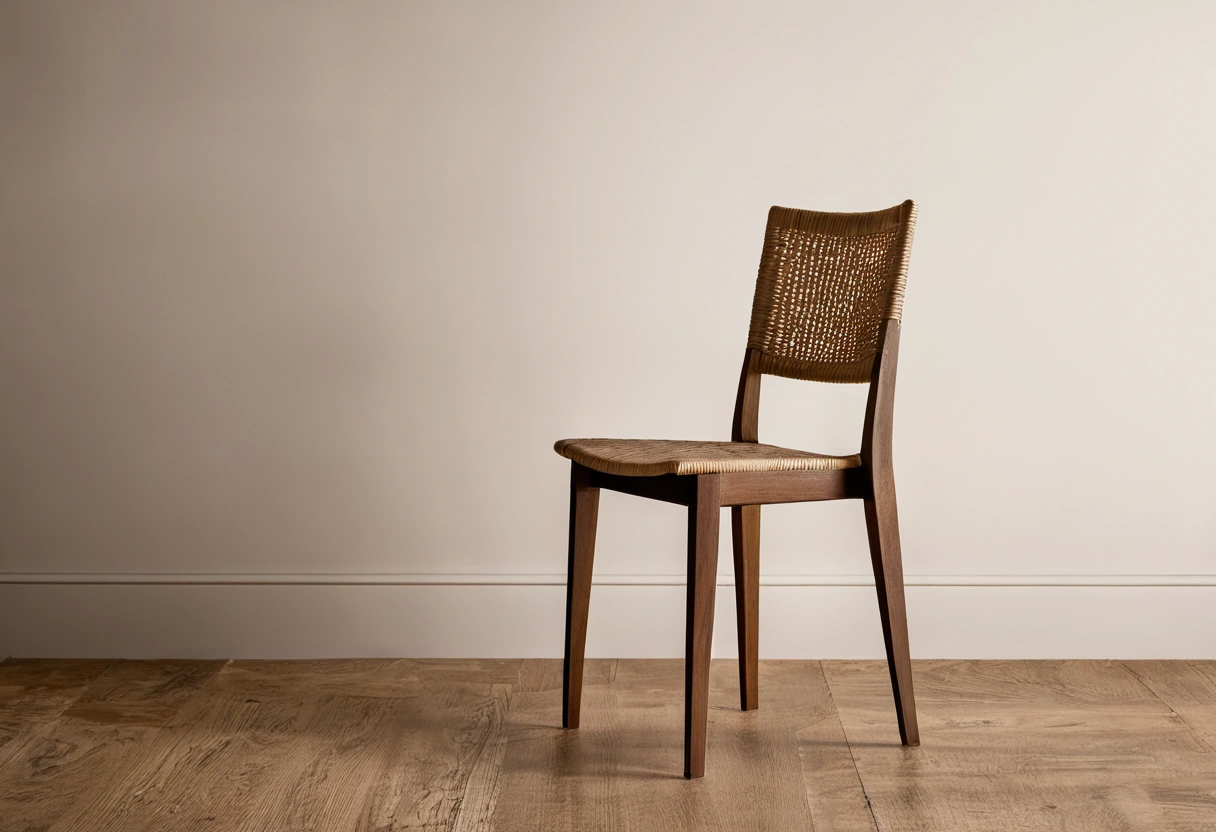
A buyer should test a handmade wooden dining chair for racking, joint construction and repairability, because a dining chair meets sideways loads every day that a static load test never reproduces. A buyer who sits and shifts weight diagonally feels a loose mortise before a salesperson hears a creak. A buyer who lifts the chair by one back leg learns whether the frame twists.
- Ask the maker which joints are glued, which joints are pinned and which joints a repairer can open with heat.
- Ask the maker for chair weight in kilograms and compare carved hardwood chairs against the 1.7 kilogram Superleggera benchmark for lightness, not for style.
- Ask the maker which wood species forms the legs and which species forms the back, because leg wood takes impact loads that back wood never meets.
- Ask the maker to price one replacement chair, because a set of eight chairs often becomes a set of seven after one move.
Why does Italian furniture keep returning to light construction?
Italian furniture returns to light construction because Italian workshops historically sold furniture into cities of stairs, small lifts and rented rooms, where a heavy chair taxed every move. Descalzi in 1807 and Ponti in 1957 solved the same problem with the tools of two different centuries: remove wood until structure alone remains. Modenese Furniture carves classic chairs with crest rails and cabriole legs that weigh more than a Superleggera, and the construction logic still applies: a glued, repairable joint outlasts a nailed joint in daily use.
A buyer who compares two carved dining chairs should compare joint maps, not only silhouettes. One chair with glued mortise and tenon joints can serve for generations and accept regluing. One chair with stapled and nailed joints can look identical in a photograph and fail at the back leg within years. The Chiavari chair has carried sitters since 1807 on glue alone, and the Superleggera has carried sitters since 1957 at 1.7 kilograms. Weight and joint choice are the specifications that decide which chair a grandchild inherits.